

You calculate back pay by first finding your daily rate—basic salary divided by 26—then multiply it by any unpaid days, including partial days based on hours worked. Add the pro‑rated 13th‑month pay (basic salary ÷ 12) for the months you worked, and cash out unused Service Incentive Leave using the same daily rate. Finally, deduct the correct SSS, PhilHealth, Pag‑IBIG contributions and withholding tax. The next sections will walk you through each step in detail.
Highlights
- Daily rate = basic monthly salary ÷ 26; unpaid salary = daily rate × unpaid days (prorated for partial days).
- Back pay includes unpaid salary, pro‑rated 13th‑month (basic ÷ 12), unused SIL cash‑out (daily rate × leave days), overtime, night differential, and earned bonuses.
- All statutory contributions (SSS, PhilHealth, Pag‑IBIG) and authorized taxes are deducted before final net payment.
- Full settlement must be made within 30 days of separation; otherwise the claim is subject to a three‑year limitation period and possible interest.
- Use the 26‑day divisor for SIL conversion and ensure proper pro‑rating of 13th‑month to avoid under‑payment errors.
What Is Back Pay in the Philippines?
If you’ve ever left a job and later discover you didn’t receive everything you were owed, that shortfall is called back pay.
In the Philippines, back pay covers unpaid salary, benefits, bonuses, overtime, night differential, and the monetary value of unused Service Incentive Leave (SIL) after resignation, termination, or retirement.
The Labor Code and DOLE regulations mandate it; non‑compliance can trigger fines, illegal‑dismissal damages, and statutory contribution liability.
Calculation follows a clear formula: daily rate multiplied by unpaid days, plus pro‑rated 13th‑month pay (total basic salary ÷ 12), and SIL value (daily rate × unused leave days).
Eligibility trends show most claims arise during separation, prompting employers to conduct payroll audits to verify compliance and avoid costly disputes.
This analytical approach guarantees you understand the legal scope and financial components of back pay.
When Is Back Pay Due?
When a worker’s contract ends, the employer must settle the employee’s back pay without delay, and the Department of Labor and Employment (DOLE) recommends that the full amount be released within 30 days of the separation date.
You should verify termination eligibility and termination timing to confirm that the employee’s service period ended law. The deadline triggers the classification of any unpaid wages as back pay, which then accrues interest and possible penalties.
The 30‑day window is strict; missing it converts the owed sum into a legal claim subject to a three‑year limitation period.
Make sure you deduct only statutory contributions—SSS, PhilHealth, Pag‑IBIG—and authorized taxes before delivering the final payment, which must cover wages, pro‑rated 13th‑month, unused SIL cash conversion, bonuses, overtime, and night differential up to the effective separation date.
What Laws and DOLE Rules Govern Back Pay?
Because the Labor Code of the Philippines (Title II, Book III) expressly requires employers to settle all earned wages and monetary benefits upon termination, it serves as the primary legal foundation for back‑pay obligations.
You must align each payment with DOLE Labor Advisory No. 06‑20, which mandates release of the unpaid salary, pro‑rated 13th‑month pay, and unused Service Incentive Leave within 30 days of separation.
Article 283 governs separation pay, a distinct but related component that influences overall statutory compliance.
BIR regulations impose withholding tax on regular jur wage and monetized leave, while the first ₱90,000 of 13th‑month pay stays tax‑exempt.
Additionally, SSS, PhilHealth, and Pag‑IBIG contributions must be deducted per the latest agency schedules, ensuring full juridical compliance and avoiding penalties.
How to Compute the Daily Rate and Unpaid Salary
Having outlined the governing statutes, the next step is to determine the employee’s daily rate, which forms the basis for calculating unpaid salary.
Compute the daily rate by dividing the basic monthly salary by 26, the statutory working‑day count required for Service Incentive Leave conversion.
If your payroll system uses calendar days, you may still apply the 26‑day divisor for DOLE compliance.
Next, calculate unpaid salary: multiply the daily rate by the number of days actually worked but not yet paid up to the last day of service.
For partial days, prorate by dividing actual hours worked by 8, then apply the daily rate.
Example: a ₱30,000 monthly salary yields a daily rate of ₱1,153.85; seven unpaid days generate ₱8,077.00 unpaid salary.
How to Add Pro‑Rated 13th‑Month Pay and Service Incentive Leave Cash‑Out
If you’ve already calculated the unpaid salary, the next step is to layer on the pro‑rated 13th‑month pay and the Service Incentive Leave (SIL) cash‑out.
First, determine the daily rate by dividing your basic monthly salary by 26. Multiply that rate by the unused leave days to get the SIL cash‑out, remembering the law guarantees at least five days.
For the pro‑rated 13th‑month, sum the total basic salary earned during the year and divide by 12; the amount up to ₱90,000 enjoys tax exemptions, while any excess is taxable.
Add both figures to the unpaid salary and other accrued benefits. Verify the aggregated back‑pay, including these components, is disbursed within 30 days of separation to avoid penalties.
How to Apply Taxes and Statutory Deductions to Net Back Pay
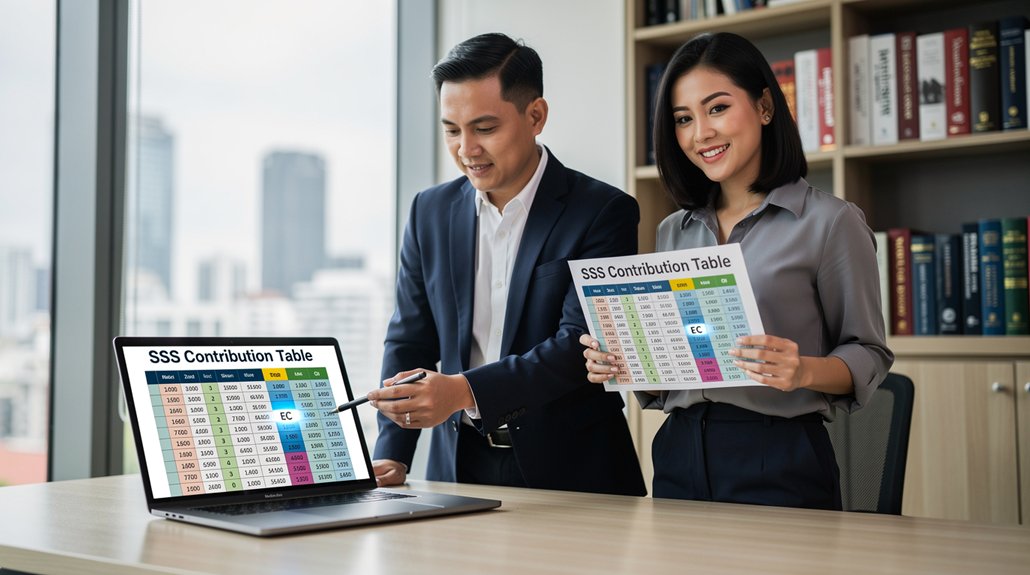
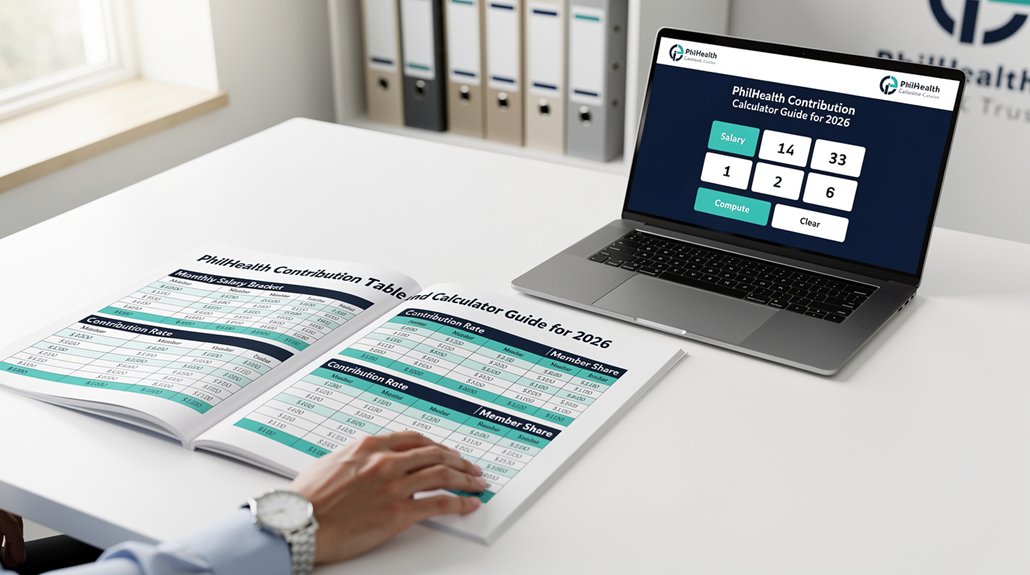
When you calculate the net back‑pay, first determine the gross amount—including unpaid salary, monetized leave, and prorated bonuses—then withhold the regular income tax according to the BIR’s compensation tables, apply the ₱90,000 exemption for the 13th‑month pay (taxing any excess at the same rates), and finally subtract the employee’s statutory contributions: SSS (₱200–₱1,125), PhilHealth (2.75 % of the monthly salary split equally), and Pag‑IBIG (2 % up to ₱5,000).
Next, compute the net figure by deducting total tax and contributions from the gross, rounding to the nearest peso. Report the net amount on Form 2316 and remit the withheld tax and payroll contributions by the statutory deadline, typically the 10th of the following month. Timing of the tax exemption is essential; it must be applied before any excess is taxed, ensuring accurate statutory payroll calculations.
Common Mistakes That Reduce Your Back Pay
Mistakes that slip into back‑pay calculations often stem from misapplying statutory formulas, and they can shave off a significant portion of what you’re owed.
You’ll find that employee errors usually arise during payroll reconciliation, where a single mis‑step can cost thousands.
By scrutinizing each component—SIL divisor, 13th‑month pro‑ration, daily rate, commissions, and statutory deductions—you protect the full entitlement.
- Using a 30‑day divisor for SIL instead of the mandated 26‑day divisor, cutting up to ~12 % of leave cash‑out.
- Forgetting to pro‑rate 13th‑month pay for pre‑December exits, losing ₱1,500‑₱3,000.
- Applying the last month’s salary to unpaid days instead of the daily rate, underpaying ₱400‑₱800 per 10 days.
- Omitting earned commissions, bonuses, or holiday pay, leaving up to 15 % unpaid.
- Not deducting correct SSS, PhilHealth, Pag‑IBIG before tax, inflating net pay and triggering penalties.
Frequently Asked Questions
Can Back Pay Be Applied to Contract Workers?
Yes, you can apply back pay to contract workers if they have wage claims arising from unpaid or underpaid periods. The law treats them like regular employees for such remuneration, provided the contract terms allow it.
What Happens if the Employer Files for Bankruptcy?
If the employer files for bankruptcy, bankruptcy proceedings prioritize Employee claims; you retain Employee rights and can pursue Legal remedies such as filing a proof of claim, seeking wage garnishment or priority payment under Philippine law.
Is Back Pay Taxable When Paid After Several Years?
You’ll find the back pay taxable when you finally receive it, and the timing of that tax follows the year you’re paid. Statutory limitations may affect how long you can claim it.
How Are Unpaid Overtime Wages Included in Back Pay?
You add unpaid overtime to the back‑pay total by including those hours in the wage calculation, applying the regular rate plus any legal premium, then summing them with all accrued salary.
Can Back Pay Be Offset by Employee Misconduct?
You can offset back pay with misconduct, but only if the employee’s breach is proven and the deduction is reasonable; this reduces liability, yet courts scrutinize any reduction to guarantee fairness.